The Most Human Part of My Day
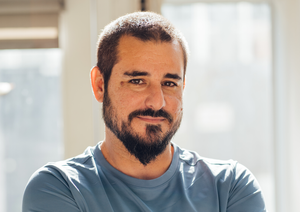
By Joaquin Brown, CTO, Yoga Wake Up
I've been noticing something lately.
Every morning I pick up my phone and within about thirty seconds I've encountered at least one story about artificial intelligence. What it can do now. What it will be able to do soon. Which jobs it's changing, which industries it's reshaping, which things we thought were uniquely human that turn out to be, apparently, replicable.
I'm not going to tell you that doesn't matter, or that you shouldn't think about it, or that everything is going to be fine. I don't know that. Neither does anyone else, whatever they tell you.
But I've been thinking about a different question. Not what AI can do. The other one. The quieter one that I suspect a lot of people are carrying around right now, even if they haven't put words to it yet.
Where do I fit?
“In a world full of AI noise, your morning is one of the most irreducibly human things you have. ”

The thing about being human that nobody puts in a headline
Here is what your morning actually feels like, if you're honest about it.
You wake up and for a moment you don't know quite who you are yet. The self assembles slowly. Your knees might be stiff. Your back might not be done deciding how it feels about yesterday. Your mind, almost immediately, starts running a list, things you said, things you need to do, things you're not sure about. You had a dream last night that you can't quite remember, but it left a feeling behind. You texted someone yesterday and you're still thinking about whether you said the right thing.
All of that happens before you've stood up. Before you've looked at your phone. Before the world has asked a single thing of you.
That is not a malfunction. That is not inefficiency. That is a human being coming back online in the morning, which is a remarkable and specific and irreplaceable thing to be.
No algorithm wakes up like that. No model has a body that needs to ease in slowly. No system carries the particular weight of yesterday's conversation into today. There is no machine on earth that lies there for a moment, in that half-waking state, and needs a few minutes to remember itself.
You do that every morning. You've been doing it your whole life. It is, I would argue, one of the most human things you do.
What AI will never need
I build technology for a living. I find it genuinely interesting. I'm not frightened of it the way some people are, and I'm not dismissive of it the way others are. I try to think about it clearly.
And when I think about it clearly, here is what I notice: AI does not need five minutes.
It does not need to reach its arms overhead and feel the length through its sides before it can think straight. It does not need to breathe slowly for a moment before the day asks anything of it. It has never lain still and let something quiet happen in its body, not because it lacks the sophistication, but because it has no body. It has no morning. It has no accumulated tiredness from the week before, or the specific relief of a Saturday, or the particular texture of a Tuesday in April when the light comes through the window differently than it did in February.
These are not poetic abstractions. They are the actual contents of a human morning.
I started thinking about this seriously a few years ago, when I was building the alarm feature for Yoga Wake Up. I kept coming back to the same question: what does a person actually need in the first five minutes after waking? Not what they should need. What they actually need. And the answer, almost every time, was the same: they need a little grace. A little gentleness. Something that meets them where they are rather than demanding they immediately be somewhere else.
That insight didn't come from a dataset. It came from watching people wake up. Including myself. Including someone I love.
What AI will never feel
The relational dimension is where I find the argument gets most interesting.
AI can process millions of conversations. It can retrieve information, generate text, recognize patterns across enormous amounts of data. It is genuinely impressive, and I say that as someone who thinks about these things professionally.
But it has never missed someone.
Not in the way you miss someone when they're traveling, and the apartment feels different, and you find yourself saving a thought to tell them later. Not in the way you miss someone who's gone, and a song comes on and for a moment they're completely present again. It has never called an old friend just because something made it think of them and it couldn't not.
It has never forgiven someone. Not the real kind of forgiveness, where you feel the weight of what happened and choose, anyway, to put it down. It has never needed to be forgiven, which is arguably the more human condition. It has never texted something and immediately wondered if it came out wrong. It has never been understood, truly understood, by someone who loves it.
That messy, tender, complicated web of people who know you, who have seen you at your worst and stayed anyway, who send you something silly just because it made them think of you, that is not a distraction from what makes you valuable. That is not the soft, inefficient part that AI is slowly making obsolete.
That is what makes you irreplaceable.
Your imperfections are not the problem. They are the proof.
The proof that you are someone who feels things, who cares about things, who lies awake sometimes thinking about whether you said the right thing to someone you love. No system will ever do that. And I mean that as the highest possible compliment.
There is a lot of noise right now about what is being automated, what is being replaced, what the future holds for human work and human value. Some of it is worth paying attention to. Some of it is panic dressed up as analysis.
But underneath all of it, every morning, you wake up. Imperfect and stiff and already thinking. A body reassembling itself. A self coming back online. A person who carries yesterday's conversations and last night's dreams and the particular weight of everything that's happened to you.
That is irreplaceable. It has always been irreplaceable. And right now, I think it's worth stopping to notice it.
This is what I was thinking about when we built Yoga Wake Up.